Artificial Intelligence (AI) is evolving, and so are AI agents.
AI chatbots, voicebots, text/SMS bots are the modern pillars of conversational AI agents. They automate, assist, optimize, and augment various workflows across different industries and channels.
Businesses nowadays are adopting AI heavily to enhance customer experiences, reduce operational costs, and scale support.
Chatbots and voicebots are the most popular solutions and are often compared. While both are designed to automate interactions, the way they engage with customers, the industries they fit best in, and the value they deliver can vary greatly.
So, which one is right for your business? Let’s break it down.
What is the difference between a voicebot and chatbot?
A chatbot is a text-based conversational AI medium that help users with their queries through chat.
The Basic communication mode is chat, it supports voice input but the primary mode of communication is chat in chatbots.
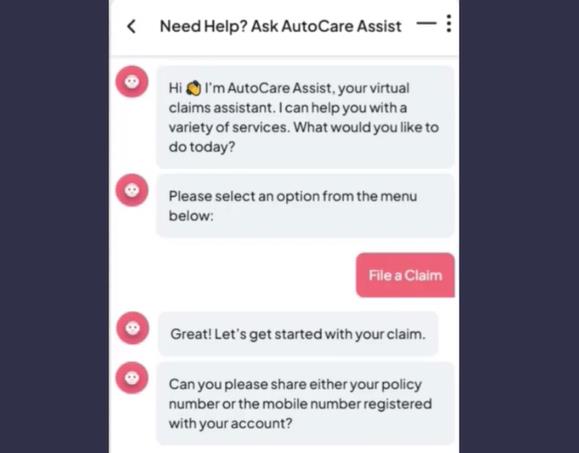
Chatbot works on predefined workflow or free flowing generative AI based conversations. It understands user queries and responds accordingly.
Here are some advantages and disadvantages of a chatbot:
Advantages
- 24/7 availability
- Handles multiple queries at once
- Offers multilingual support
Disadvantages
- Limited integration options with the existing systems
- Not very intent-friendly if not trained using the right data
On the other hand, a voicebot mode of communication is voice. User needs to communicate via voice. It listens to what users say, converts it to text using speech recognition technology, and then understands the user's intent to provide a response.
Some advanced voicebots can directly understand the intent from the spoken words without converting to text first.
This is what a voicebot tech stack looks like:
- When the user speaks to Voicebot, the ASR engine transcribes the spoken words into text.
- The transcribed text is passed to NLP(AI) engine.
- The AI engine processes the query and returns the appropriate answer in the form of text.
- Then, the TTS engine converts the answer into speech.
Both chatbots & voicebots are available 24/7, handling high-volume workflows like managing insurance renewal reminders, answering FAQs, helping with digital onboarding, and more.
Here are some advantages and disadvantages of a voicebot:
Advantages
- Automate specific workflows and provide time assistant
- Properly document customer details for future access
- Follows a conversational approach, understanding the user intent
Disadvantages
- Expensive compared to chatbot
- Difficult to implement if developed manually
Here is the detailed comparison between chatbot and voicebot.
| Elements | Chatbot | Voicebot |
| Mode of communication | Chat | Voice |
| Backend technologies |
- Artificial Intelligence (AI) |
- Automatic Speech Recognition (Speech to text). |
| Easy to use | Simple to deploy using an AI agents' platform (low code/no code) | Simple to deploy using an AI agents' platform (low code/no code) |
| Cost-effective | Fairly cost-effective compared to voicebots | Might get expensive due to its backend technologies and workflows |
| Accessibility | Accessible from any device. Additionally, can take user input in the form of speech as well | Accessible from devices with calling features |
| Visual elements | Visual elements can be added to a chatbot to make it visually appealing. | Visual elements cannot be added to voicebots. |
| Integrations | Chatbots can be integrated into almost all platforms such as websites, WhatsApp, mobile apps, Facebook messenger, and more. | Voicebots can be integrated into the system which enables inbound and outbound calls. |
Are voicebots better for customer service than chatbots?
When we specifically review voicebots or chatbots for customer support automation, the clear winner depends on the industry.
The key factors while picking the best option depend on the type of interactions your customers prefer, overall customer behaviour, and the urgency factor.
For instance, if you are an insurance agency, then your policyholders would prefer to call instead of texting during a catastrophe.
With the advanced and powerful AI platform, you don't need to pick between a Voice AI Agent vs Digital AI Agent right now.
Test the water and build your chatbot on the platform that offers voice-enabled AI chat to understand the frequency and pattern of interaction.
When should businesses choose a voicebot over a chatbot?
When your major mode of communication with the customers is through calls/human support agents then opt for a voicebot over a chatbot.
If you want to give speed and convenience to your customers, then choose a voicebot.
Voicebots are best for urgent customer queries, in case a business gets a great number of urgent queries then it should go for a voicebot.
When a business has less tech-savvy customers then in that scenario business should opt for a voicebot.
Which one you should choose based upon industry you belong?
Here are few industries in which voicebots are better suited along with some use-cases
Voice works best when speed, convenience, and natural conversations matter.
- Insurance companies - Claims FNOL, policy inquiries, claim status updates etc.
- Banking & Finance - Balance checks, fraud reporting, loan inquiries, card related queries via phone
- Healthcare - Appointment scheduling, reminders, prescription refills, nurse line triage
- Travel & Hospitality - Flight updates, hotel bookings, real-time rebooking during disruptions
- Utilities & Telecom - Outage reporting, billing support, service activation
- Collections & Debt Recovery - Outbound calls, payment reminders, dispute handling
In above use-cases voicebot works best as customers here are often stressed, in a hurry, or multitasking - they prefer speaking over typing.

Here are some industries where chatbots are better suited
Chatbot works best for these use-cases as customers here may need visuals, links, or step-by-step guidance - text is clearer than voice.
- E-commerce & Retail - Product search, order tracking, return/refund handling
- Education & E-learning - Student queries, course recommendations, admissions FAQs
- HR & Recruitment - Candidate screening, employee FAQs, onboarding support
- IT & SaaS - Tier-1 tech support, troubleshooting guides, knowledge base queries
- Real Estate - Property listings, appointment scheduling, lead qualification
- Government & Public Services - Citizen FAQs, document guidance, form assistance
Do voicebots cost more to implement than chatbots?
Yes, voicebots cost more than chatbots because of their complex architecture compared to chatbots.
For a voicebot to function, it needs the following:
- Telephony integration (SIP, PSTN, IVR systems) on top of AI.
- Tech stack that includes STT (real-time speech to text), NLP (natural language processing), and TTS (text-to-speech).
- Proper configurations for language, accents, noise handling and interruption.
Whereas chatbots are purely text-based, built on messaging platforms or web widgets, and they are easier to scale across multiple channels without any other requirements.
In a chatbot vs voicebot pricing comparison, a chatbot comes across as more price-effective.
How to decide which conversation ai solution to choose?
Define your goal
Your first deciding factor should be to check your goal for implementing a bot. Your goals could be – to provide customer support, help users find information related to your product or service, user engagement, lead generation, etc.
Based on your automation goal, you can decide on use cases for your business where the bot will play a crucial role.
Customer preferred communication method
Know your customer’s preferred way to communicate with your business. For instance, if you often get queries over calls than by website or any other means then phone calls are the preferred way of communication for you.
Scalability & Customization
As your business grows, the preferred voicebot or chatbot should be able to handle a larger number of queries and automate your workflows without breaking any flow.
Additionally, the solution should allow a high level of brand customization to edit the messaging and the appearance of your bot to match with your brand aesthetic.
Best chatbot and voicebot platform to use
Floatbot.AI is one of the best conversational AI platforms that lets you build chatbots and voicebots with a no-code/low-code approach.
Its complete LLM-powered conversational AI (multi-modal) agents help to streamline workflows and operations for insurance, collections, healthcare, banking, lending, BPO, and more.
Using our platform, you can deploy a unified chatbot, voicebot, and text bot without getting into deep technicalities.
🔔 Fresh News: Floatbot has been recognized as a Core Performing Solution across all three CMP Prism categories, including Conversational IVR/Voicebot 2026 - read more here.
Resulting in:
- Increase First Response Time (FRT) by 60%
- Boost Rate of Automated Resolution (ROAR) by 85%
- Reduce Customer Effort Score (CES) by 80%
- Enhance Customer Satisfaction (CSAT) by 90%
Our AI agents are not limited to automation but also come with AI agent assist (AI Copilot), live chat with co-browsing, and ASR-as-a-Service.
Schedule a demo to see how our conversational AI agent solutions can automate your workflows.
Conclusion
When it comes to AI chatbot vs AI voicebot solutions, there isn’t a clear winner — it really depends on your customer needs and channel of interaction.
If most of your interactions happen on websites or apps, a chatbot might be the smarter choice. But if your customers often reach out by phone or need quick, real-time help, a voicebot could be a game changer.
At the end of the day, the “better” option is the one that makes your customer experience smoother and your team’s job easier.